Can New York City’s Crime-Fighting Techniques Work in Oakland?
MGO presents Dr. Frank Zimring
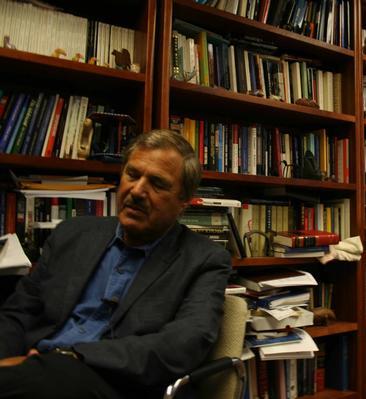
Can New York City’s Crime-Fighting Techniques Work in Oakland?
Wednesday, May 22, 2013, 8:00pm
Stern Hall, Temple Sinai, 2823 Webster Street, Oakland
Dr. Zimring is the William G. Simon Professor of Law and Criminal Justice at UC-Berkeley and the author of The City that Became Safe: New York’s Lessons for Urban Crime and Its Control, a study of New York City’s drop in crime and the lessons about policing and drug enforcement it holds for other cities. He is a captivating speaker who has lectured internationally.
Zimring on His Advice to a Mayor on How to Reduce Crime:
“The first thing I can tell the mayor in city X is that we now know for the first time that policing really matters. And I can give him two or three different things to do with policing that have been proved to work:… problem solving policing, hot spot techniques, if you have any open air street drug markets, close them fast. Those are off the shelf technologies that are going to work very well.”
Attendance at an MGO Democratic club meeting is free and members of the public are welcome.
The Metropolitan -Greater Oakland Democratic Club is a grassroots Democratic organization that has been involved in Oakland and Alameda County policy and political issues for over 50 years.
Operation Ceasefire
mgo presents A PANEL ON OPERATION CEASEFIRE IN OAKLAND
Thursday, April 18, 2013, 8:00 PM
Stern Hall, Temple Sinai, 2823 Webster Street, Oakland
Operation Ceasefire is an evidence-based strategy designed to significantly reduce gang and group related homicides and non-fatal shootings and depends on community and interagency cooperation. It was designed Boston criminologist David Kennedy and has been credited with reducing juvenile homicide significantly in that city. Last October, Oakland joined a number of other California cities in implementing Operation Ceasefire.
“Violence is driven by peer pressure and group dynamics,” often involving young men’s responses to perceived disrespect, Kennedy said. Offenses are committed by a small number of people, even in the most troubled neighborhoods.
The MGO Democratic Club is honored to announce a panel presentation featuring representatives from these agencies and organizations charged with implementing Operation Ceasefire:
- Deputy Chief Eric Breshears, Oakland Police Department, and
- John Creighton, Deputy District Attorney, Alameda County;
- Rev. Dr. George C. L. Cummings, Imani Community Church, Oakland..
This is the third in a monthly series on Perspectives on Crime in Oakland presented by the Metropolitan–Greater Oakland Democratic Club. Future programs include:
Can New York City’s Crime-Fighting Techniques Work in Oakland?
- Oakland Police Department and the federal Compliance Director: How Will the Compliance Director Affect OPD?
- Measure Y: Should It Be Renewed?
Attendance at an MGO Democratic club meeting is free and members of the public are welcome.
The Metropolitan -Greater Oakland Democratic Club is a grassroots Democratic organization that has been involved in Oakland and Alameda County policy and political issues for over 50 years.
MGO Presents:
REALIGNMENT:
THE EXODUS FROM STATE PRISON TO COUNTY JAIL- WHAT DOES IT MEAN FOR OAKLAND?
Thursday, March 14, 2013 8 PM
Stern Hall, Temple Sinai, 2823 Webster Street, Oakland
On October 1, 2011, California’s corrections realignment plan, one of the most significant changes to California’s criminal justice system in decades, went into effect. The plan shifts responsibility from the state to counties for the custody, treatment, and supervision of individuals convicted of specified nonviolent, non-serious, non-sex crimes.
The MGO Democratic Club is proud to announce a panel presentation featuring representatives from the agencies charged with carrying out the realignment plan: John Keene from the Probation Department, Karen Meredith from the District Attorney’s Office, Carla Kennedy from the Sheriff’s Department, and Brandon Woods from the Public Defender’s Office.
This is the third in a monthly series on Perspectives on Crime in Oakland presented by the Metropolitan–Greater Oakland Democratic Club. Future programs include:
- Can New York City’s Crime-Fighting Techniques Work in Oakland?
- Oakland Police Department and the Compliance Directorship: What Will the Compliance Director Do to OPD?
- Operation Ceasefire: What Will It Take to Make It Work?
- Measure Y: Should It Be Renewed?
Attendance at an MGO Democratic club meeting is free and members of the public are welcome.
The Metropolitan -Greater Oakland Democratic Club is a grassroots Democratic organization that has been involved in Oakland and Alameda County policy and political issues for over 50 years. Further information is available on our website, www.mgoclub.org and on Facebook.
Interagency Coordination and Cooperation in Fighting Crime in Oakland

Thursday, February 21, 2013 8 PM
Stern Hall, Temple Sinai, 2823 Webster Street, Oakland
To understand the crime problem in Oakland it is important to know what agencies are involved, what their roles are, how they interact, and if they are effective working together. The MGO Democratic Club is proud to announce a panel presentation featuring:
- Chief of Police Howard Jordan,
- Chief Probation Officer LaDonna Harris,
- District Attorney Nancy O’Malley,
- Juvenile Court Presiding Judge Rhonda Burgess, and
- Alameda County Public Defender’s Office.
This is the second in a monthly series on Perspectives on Crime in Oakland presented by the Metropolitan–Greater Oakland Democratic Club. Future programs include:
- Can New York City’s Crime-Fighting Techniques Work in Oakland?
- Oakland Police Department and the Compliance Directorship: What Will the Compliance Director Do to OPD?
- Operation Ceasefire: What Will It Take to Make It Work?
- Measure Y: Should It Be Renewed?
- Realignment: How Is the State Prison Exodus to County Jail Affecting Oakland?
Attendance at an MGO Democratic club meeting is free and members of the public are welcome.
- NEW!! Read the February 2013 edition of The Platform, the club newsletter here.
Special Energy Choice Vote

At our next meeting on Thursday, January 10, 2013, we will be voting on whether to endorse community choice aggregation energy policy for Oakland.
Since 2002 state law has allowed local areas to choose power sources other than PG&E. Finding ways that electricity consumers can get their energy needs met from sources other than PG&E is an idea that has gained much support. Marin County, the city of Richmond and San Francisco have all adopted energy choice programs. This is an important issue affecting clean energy concerns and energy costs and involves everyone in our community.
Enabled by Assembly Bill 117, Community Choice Aggregation (CCA) is a system that allows local governments to procure electric energy for residents and businesses within a community. The enabling legislation requires that investor-owned utilities such as PG&E cooperate with local governments to provide electricity delivery over its existing distribution system, including consumer metering, billing, collection and all traditional retail customer services (i.e., call centers, outage restoration, extension of new service.)
CCA is a tool through which local governments can have a choice of where to get their electricity from. Its proponents argue that putting procurement of electricity under public control can reduce greenhouse gas emissions while providing a platform for local economic development.
In order to vote, you must have been a paid member of MGO for 30 days prior to any endorsement election.
 Metropolitan Greater Oakland Democratic Club